
Scent Zoning for Commercial Spaces: The 2026 Guide for Australian Businesses
Walk into a well-designed hotel lobby and something shifts before you've consciously registered why. The lighting is good. The furniture is right. But more often than not, it's the scent doing the heavy lifting.
Scent zoning — the practice of deliberately assigning different fragrances to different areas of a commercial space — has moved from luxury hospitality into mainstream business design. In 2026, it's becoming standard practice across strata buildings, aged care facilities, offices, and retail environments across Australia.
This guide explains what scent zoning is, why it works, and how to implement it in your commercial space.

What Is Scent Zoning?
Scent zoning is the strategic placement of different fragrances across distinct areas of a building or venue to create specific psychological and sensory effects in each zone.
Rather than diffusing one uniform scent throughout an entire property, scent zoning treats each area as having its own function and atmosphere — and matches the fragrance accordingly.
A well-executed scent zoning strategy in a hotel might look like this:
Lobby/entry — an energising, welcoming signature scent that creates immediate brand recognition.
Corridors and lifts — a neutral, clean scent that transitions between zones without clash.
Gym or wellness area — a fresh, invigorating fragrance that supports activity.
Dining area — a warm, subtle scent that complements food aromas without competing.
Guest rooms — a calming, sleep-supporting fragrance that aids relaxation.

Each zone serves a different guest experience. The scent follows that intent.
Why Scent Zoning Works: The Science
Human olfaction is processed by the limbic system — the part of the brain responsible for emotion and memory. Unlike visual or auditory information, scent bypasses the cognitive filter and registers almost instantly at an emotional level.
Research consistently shows that ambient scenting affects dwell time (people spend longer in pleasantly scented spaces), perceived cleanliness (fresh scents raise cleanliness ratings even when the environment is unchanged), mood and stress levels, and brand memory — signature scents are recalled at significantly higher rates than visual logos alone.
Scent zoning amplifies these effects by ensuring the fragrance is always contextually appropriate. A scent that's calming in a waiting room might feel out of place in a reception area. Zoning keeps each fragrance in its optimal context.
Scent Zoning by Industry: Australian Applications
Strata and Residential Buildings
For strata managers, scent zoning addresses two distinct challenges: eliminating odour problems in common areas (garbage rooms, car parks, corridors) and creating a premium atmosphere in lobby and reception spaces.
Effective strata scent zoning separates lobby and entry (light, fresh signature fragrance), lift interiors (neutral odour control, refreshed frequently), basement and car park (targeted odour control rather than fragrance), and garbage rooms (neutralisation systems — never masking).
Hotels and Hospitality
Scent zoning is most developed in the hotel sector, where it's been used for decades by luxury chains to create distinctive brand experiences. In 2026, mid-market and boutique Australian properties are adopting the same strategies.
The key principle in hospitality: zones should transition gradually. Abrupt scent changes between spaces feel jarring. Professional hotel fragrance solutions include transition planning as part of the brief.
Aged Care and Healthcare
Aged care presents unique scent zoning requirements. Odour management is critical to resident dignity and family confidence — but fragrance must be carefully chosen to avoid triggering respiratory issues or adverse reactions.
Entry and reception areas work best with very light, clean fragrances at low diffusion rates. Communal dining and living areas benefit from warm, familiar scents — lavender aromatherapy in particular has been studied as a non-pharmacological aid for agitation in dementia patients, with several clinical trials reporting positive results. Clinical and care areas should use odour neutralisation only, with no added fragrance.
Sources: Aromatherapy for BPSDs in Alzheimer's Disease — Clinical Evidence (PMC) · Lavender RCT for agitated behaviour in dementia (PMC)
Offices and Corporate Spaces
Office scent zoning is gaining traction as employers look for evidence-based ways to support productivity and wellbeing. Reception and meeting rooms work well with light citrus or green scents associated with alertness and focus. Breakout and lounge areas suit warmer, more relaxed fragrances. Open plan workspaces need subtle, neutral diffusion at low intensity — the goal is to support concentration without the scent becoming a distraction or irritant.
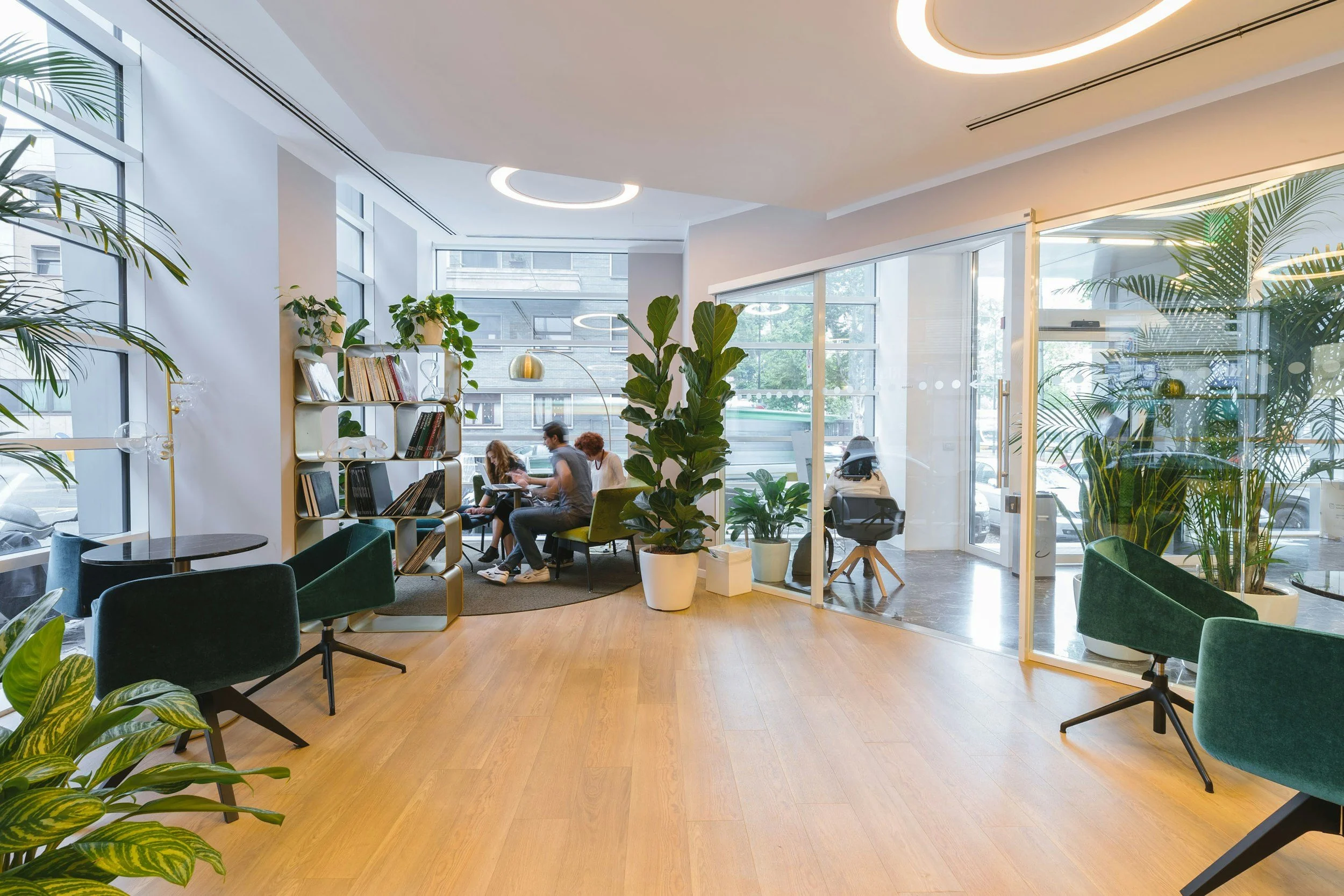
Every commercial environment has different scenting needs. A tailored zone strategy ensures each area works independently.
How to Plan a Scent Zoning Strategy
Start by mapping your zones — draw a floor plan and identify areas by their primary function, grouped by the emotional state you want to encourage: energised, calm, focused, welcoming.
Before any fragrance is introduced, identify and resolve underlying odour issues. Scent zoning should never be used to mask persistent odours. Any mould, waste, or HVAC contamination needs professional odour control first. Masking odours with fragrance degrades the result and is immediately noticed by occupants.
Choose fragrances with transition in mind — adjacent zones need compatible notes. Conflicting fragrances in close proximity create a confusing or unpleasant experience. Match the diffusion technology to each space: a hotel lobby needs high-capacity HVAC-integrated systems, while a small breakout room may only need a single cold-air diffuser. Finally, plan for a commissioning period — scent perception changes with temperature, humidity, and occupancy levels, and adjustments after installation are normal.
The Cost of Getting It Wrong
Poor scent zoning — or using fragrance without a strategy — creates problems that are harder to fix than having no scent at all.
Common failures include scent bleed between zones (where two fragrances combine into something unpleasant), over-diffusion (strong enough to trigger headaches or complaints), masking without solving (using fragrance over an unresolved odour problem), and mismatch with brand (where the fragrance contradicts the visual and service experience).
Working with a specialist rather than purchasing off-the-shelf diffusers significantly reduces these risks and ensures the investment delivers the intended result.
Getting Started with Commercial Scent Zoning in Australia
Actualised Industries provides end-to-end commercial scenting and odour control across Melbourne, Sydney, and Canberra. Our process starts with an assessment of your space — identifying odour issues, mapping zones, and recommending fragrance and delivery systems matched to your environment and brand.
Whether you're managing a strata building, running a hotel, or designing a new office fit-out, we'll develop a scent zoning strategy that works from day one.