
HVAC Scenting: The Most Cost-Effective Way to Scent High-Rise Building Foyers
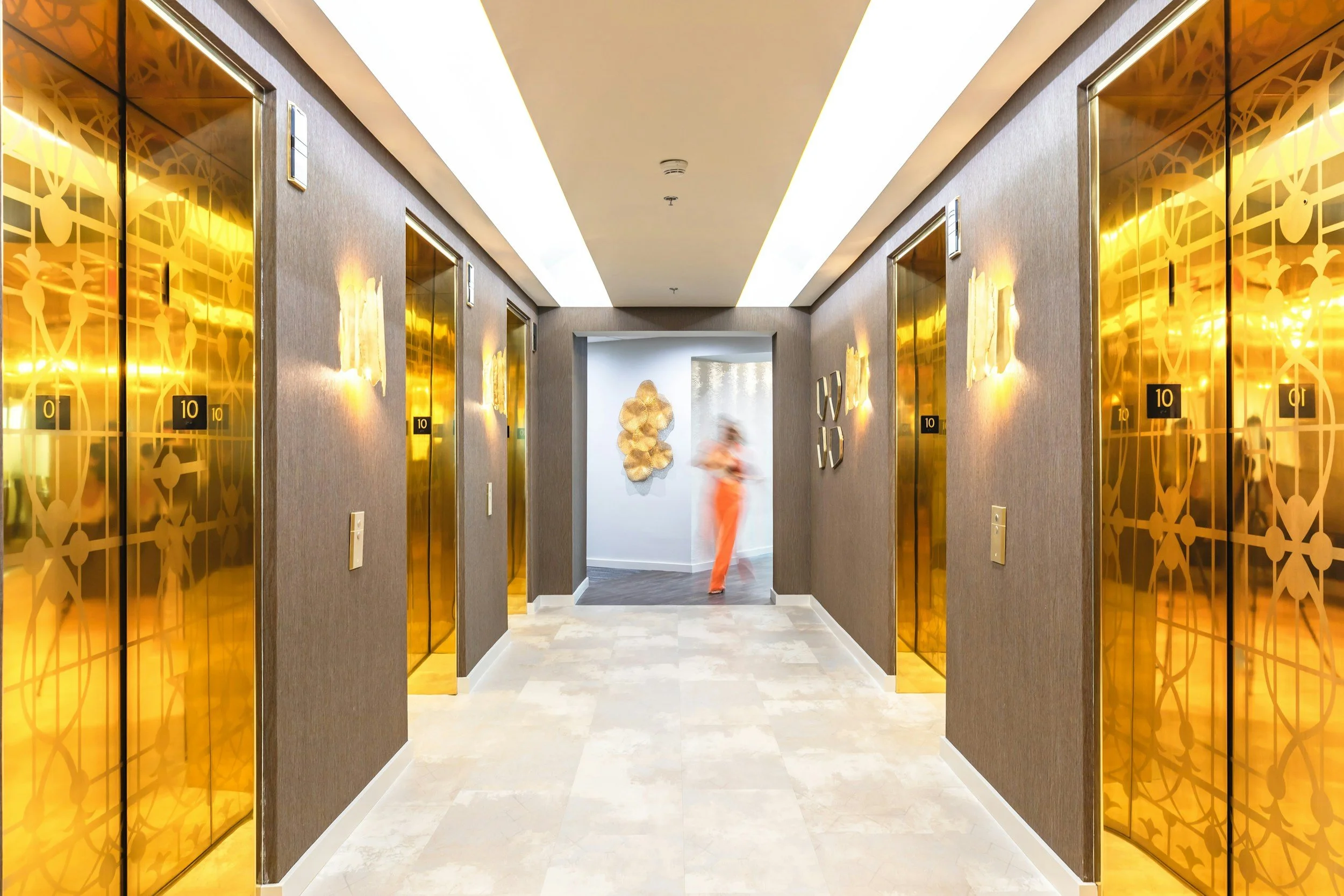
Why Your High-Rise Building's Fresh Air Duct Is Your Biggest Scenting Opportunity
Most property managers and facility operators managing high-rise buildings don't realise their fresh air intake is a powerful delivery mechanism for scenting lift foyers throughout the building.
A single scenting decision in your fresh air duct can reach every floor. Every lobby. Mostly uniform across the building.
Traditional point-and-spray diffusers mean installing units in 15, 20, sometimes 30+ individual foyers. HVAC scenting means one system. One refill. All foyers reached.
Here's what you need to know about HVAC scenting for high-rise buildings, how it works, and why it's the most cost-effective solution for foyer scenting at scale.
The High-Rise Lift Foyer Problem
Scenario: 25-storey residential high-rise with 24 lift foyers (one per floor, shared lobbies).
The challenge: Each foyer develops its own smell profile — cooking odours from apartments, stale air from shared spaces, occasional pest control odours. Residents notice. It affects perceived building quality.
Traditional solution: Install individual diffusers in each of the 24 foyers.
24 diffuser units to purchase
24 cartridges to track and refill monthly
24 points of maintenance
Monthly cost: $480–720 (at $20–30 per diffuser)
The A.I. Scent solution: One duct fitting in the fresh air intake.
One system covers all lift foyers simultaneously
One bi-monthly refill
Mostly uniform scent throughout building
Monthly cost: $150–200
Annual savings: $3,360–6,840 vs. individual diffusers
How HVAC Scenting Works in High-Rise Buildings
The Fresh Air Intake Opportunity
High-rise buildings use centralised HVAC systems that pull fresh air through a single intake point, then distribute conditioned air to every floor via main risers and branch ducts.
This is your scenting advantage.
Fresh air scenting typically reaches:
Most lift foyers (common areas)
Main corridors
Lobbies
Shared spaces
All from one injection point.
The A.I. Scent Duct Adapter: Why It Works
The A.I. Scent fresh air duct fitting is specifically engineered for high-rise buildings because it mitigates the backpressure concern.
The backpressure concern: Some facility managers worry that scenting devices could restrict airflow and affect HVAC performance.
The A.I. Scent solution: The duct adapter is designed to introduce fragrance without restricting airflow. It maintains system efficiency while delivering fragrance throughout the building.
Result: You get scenting reach without HVAC penalties.
What Happens in the Ducts
Fresh air enters building intake duct
Duct adapter introduces fragrance at the intake point
HVAC fan circulates scented air through main risers
Scent reaches lift foyers and common areas across connected floors
When fresh air intake cycles, scent lingers slightly and builds to consistent ambient level (not overpowering)
Real-World High-Rise Example
Building: 25-storey residential tower, 240 apartments, 24 lift foyers
Problem: Lift foyers smell stale and variable. Residents complain. Building appearance suffers.
Traditional solution cost:
24 diffuser units: $1,800–2,400
Monthly refills (24 cartridges): $480–720/month
Annual maintenance and cartridge replacement: $5,760–8,640/year
A.I. Scent solution cost:
Fresh air duct fitting installation: Free (bundled service)
Bi-monthly fragrance refill service: $150–200/month average
Annual cost: $1,800–2,400
Annual savings: $4,360–7,240
Additional benefit: Residents perceive the building as higher quality. Scent reaches most foyers uniformly — you're not managing individual diffuser placement and coverage issues.
Why A.I. Scent Works Better Than Individual Diffusers in High-Rises
HVAC Scenting vs. Individual Diffusers: Side-by-Side Comparison
Foyers Covered The A.I. Scent HVAC solution reaches most or all foyers (24+) in your building through a single duct connection. Individual diffusers, by contrast, cover one foyer per unit—requiring 24 separate units for the same coverage.
Installation HVAC scenting requires one strategic installation point in your duct system. Individual diffusers require multiple units to be placed, configured, and maintained across your building.
Refills With HVAC scenting, you manage one bi-monthly refill service. Individual diffusers demand 24+ cartridge replacements every month, creating significant operational burden.
Cost Per Foyer Per Year HVAC scenting costs $75–100 per foyer annually. Individual diffusers run $240–360 per foyer per year—three to four times more expensive.
Maintenance Burden HVAC scenting requires minimal maintenance—one vendor, one service schedule, one point of contact. Managing individual diffusers means tracking 24+ units, monitoring battery life, coordinating multiple service visits, and juggling numerous cartridge orders.
Coverage Quality HVAC scenting delivers mostly uniform coverage across all connected foyers using the same air source, ensuring consistent ambient scent. Individual diffusers produce variable coverage depending on diffuser placement, battery condition, and local air circulation—some foyers may smell stronger than others.
HVAC Impact The A.I. Scent adapter is designed for efficiency with minimal impact on your HVAC system. Individual diffusers have no HVAC impact, but the batteries they rely on fail regularly, requiring constant replacement.
Perceived Building Quality HVAC scenting creates a higher perceived building quality with a uniform, sophisticated scent experience across the entire property. Individual diffusers produce variable and inconsistent impressions—guests may notice the scent in some areas but not others, undermining the professional effect.
What's Involved
Step 1: Assessment (Actualised Industries)
Fresh air intake duct is identified
Suitable injection point confirmed (typically after intake damper, before fan)
Duct dimensions verified (standard ductwork compatible)
Step 2: Installation
Duct adapter installed in fresh air duct
Typical installation: 2–4 hours
No modifications to existing HVAC system
No disruption to building operation
Step 3: Testing (Actualised Industries technician)
Airflow is confirmed unchanged
Scent distribution tested across multiple floors
System commissioned
Total downtime: Minimal. Most installations happen during non-peak hours.
The Backpressure Solution
The duct adapter is engineered specifically for high-rise HVAC systems because it introduces fragrance while minimising air resistance.
How it works:
Adapter fits standard ductwork
Fragrance injection point is designed to minimise resistance
HVAC fan operates at normal efficiency
Air handlers maintain standard performance
Result: No energy cost increase. Minimal HVAC strain.
Fragrance Selection for High-Rise Scenting
Not all fragrances work well in commercial HVAC systems.
What works:
Commercial-grade fragrance oils (not household perfumes)
Scents formulated for air duct distribution
Actualised Industries foyer fragrance range — all formulated for HVAC duct distribution and high-rise environments
What doesn't work:
Aerosol sprays (damage HVAC components)
Perfumes with high alcohol content (evaporate too quickly in ducts)
Budget fragrances (poor performance, inconsistent delivery)
Best practice: Use fragrance specifically tested for HVAC duct injection and high-rise distribution. Actualised Industries supplies commercial-grade fragrance formulated for this exact application.
Cost Breakdown: A.I. Scent vs. Individual Diffusers
A.I. Scent Fresh Air Duct Solution
Initial Setup:
Fresh air duct fitting installation: Free
Duct adapter and installation: Included in service
Total startup cost: $0
Ongoing (Monthly):
Bi-monthly fragrance refill service: $150–200/month average
Annual cost: $1,800–2,400
Individual Diffuser Solution (24 foyers)
Initial Setup:
24 diffuser units: $1,800–2,400
Total startup cost: $1,800–2,400
Ongoing (Monthly):
24 cartridge refills: $480–720
Battery replacements: ~$200/year
Unit maintenance/replacement: ~$300/year
Annual cost: $7,080–10,320
Maintenance & Monitoring
Bi-Monthly Service (Actualised Industries Technician)
Replace fragrance cartridge (every 2 months)
Verify scent is reaching foyers
Inspect system condition
Building Owner Tasks (Minimal)
Monitor scent quality in foyers
Contact Actualised Industries if any issues arise
That's it. One vendor to manage. Actualised Industries handles all service work bi-monthly.
Real FAQs from High-Rise Operators
Q: Will A.I. Scent affect my HVAC warranty? A: No. The duct adapter is designed to integrate with existing systems without modifications. Always confirm with your HVAC contractor, but professional installation maintains warranty compliance.
Q: Can I scent only certain floors? A: The fresh air duct approach scents most connected floors in the system. If you want selective scenting (e.g., only lobbies, not all risers), discuss zone-specific options with Actualised scenting consultants.
Q: What if residents complain about the scent? A: A.I. Scent allows you to adjust fragrance type or intensity system-wide. Unlike our individual diffusers (each requiring separate manual adjustment), the duct system gives you complete central control. You can change scent or remove it entirely.
Q: How long does the scent last? A: Scent is present whenever the HVAC system runs fresh air intake. Typically 2–4 hours after the system cycles off. As the building operates during the day, scent is continuous in foyers.
Q: What if my HVAC contractor says they can't help with installation? A: That's fine — Actualised Industries technicians handle the complete installation. We work directly with your building's HVAC system and manage the entire process, so you don't need contractor involvement. We coordinate with your facilities team to ensure minimal disruption.
Q: Can I use any fragrance in the A.I. Scent system? A: No — use only commercial-grade fragrance formulated for HVAC duct injection. Aerosols, perfumes, or budget fragrances will damage the Actualised diffuser or perform poorly.
Why High-Rises Should Scent Lift Foyers
Perceived building quality improves. Residents notice when foyers smell better. It signals that the building is well-maintained and professionally managed.
Cost per resident is minimal. In a 240-apartment building, $150–200/month scenting cost is $6–8 per apartment per month. Most residents won't even know they're paying for it (it's part of building maintenance), but they'll notice the improved environment.
Operational simplicity. One system to manage beats 24+ individual diffusers falling out of battery, getting knocked over, or sitting empty for weeks.
Consistent experience. Rather than some foyers smelling fresh and others stale, HVAC scenting provides mostly uniform scent throughout the building.
Getting Started with A.I. Scent
Step 1: Contact Actualised Industries to assess your fresh air intake duct and identify the ideal injection point.
Step 2: Confirm your building's fresh air volume and desired scent intensity.
Step 3: Select your fragrance (we recommend our commercial-grade range tested for duct distribution).
Step 4: Install the duct adapter (typically 2–4 hours).
Step 5: Set up bi-monthly refill schedule and begin enjoying consistent foyer scenting.
The Verdict
For high-rise buildings with 10+ lift foyers, HVAC ductwork scenting is the most cost-effective approach to managing odours and creating uniform ambient scenting.
The A.I. Scent fresh air ductwork solution is specifically designed for this application — it reaches foyers throughout the building while maintaining HVAC efficiency, and costs a fraction of individual diffuser solutions.
The math is simple:
Install once: free
Maintain bi-monthly: $150–200/month average
Save annually: $4,000–7,000 vs. diffuser approach
Benefit: Building-wide scenting, professional maintenance, improved perceived quality
Ready to Scent Your High-Rise?
Actualised Industries specialises in commercial scenting solutions for high-rise buildings. We supply duct adapters and commercial-grade fragrance tested for ductwork distribution.
Get a free ductwork assessment: Click the Contact Us button to connect with our team.
We'll evaluate your fresh air intake, confirm ideal installation point, calculate your specific monthly cost, and answer any HVAC concerns your contractor may have.
Better Air. Better Health. Better Business.